21 November 2024

Sanctuary Forest Wild Garden

I like to inform that I no longer practise as a dance movement therapist. I no longer have a website Embodied Movement. I have let go of the domain name. It looks like someone has bought over the domain name. 

After 5 years of solitude life, my new website is 'Sanctuary Forest Wild Garden'. I accompany souls in retreats. 

I keep this blog as the testimony means a lot to me as a person. I appreciate their valuable time to write their sharing.

Blessings,

Elizabeth Angel Rose

26 December 2017

Testimony by Learner


What I appreciated most, when I took Elizabeth’s course on A Client-Centred Approach to Dance Movement for Seniors, was that she never for a moment gave me the feeling that she was just going through the motions.

There were instances during the training that I stepped into the shoes of a client seeking her help and thought to myself, “Oh, I have absolute faith in someone with this much compassion”. She projected how wonderfully exciting it is to have so much potential to change someone else’s life for the better. Elizabeth cared to maximise our opportunity to also learn from one another as peers by making us partner someone different for each activity. She provoked our thoughts and kept us on our toes. Believe me, no one was sleeping in class! I learnt (and am still learning) to pick up on the nuances in one’s actions and reactions. To be under the instruction of a person so true to her cause was indeed satisfying and inspiring.

After the course, we kept in touch and Elizabeth helped connect me to an organisation where I have been putting what I’ve learnt into practice. She still patiently guides me whenever I need help. Our initial contact had indeed thrown light on my desire to take from, and give back, on the path of love.

~ Tina, 43, Activity Facilitator / Chaperone, for the elderly and persons with dementia

14 November 2017

My deepest greatest joy is to witness my client shine! - Testimony!

Sanne is a very talented costume designer. What she is wearing is her own design and made the dress herself from scratch.


Name: Sanne Hazemeijer
Age: 33
Job: costume designer

My journey with Elizabeth, finding my inner child and so much more along the way
I felt like I wasn't helped in many years of seeing many different doctors. A doctor just looks at one thing, a psychologist at only one trauma. No one looked at me like a whole person, with feelings, a history and some physical difficulties. I felt like no one actually listened. That is when I started looking for dance therapy, because I was struggling with the fact I couldn't dance anymore due to rheumatism. I found someone and she redirected me to Elizabeth. I e-mailed her my story and thus our journey began. And for the first time, I felt like a person. A person that was worth listening to. She spoke to me about different things and she showed me how to claim back my personal space, she showed some really good insights on personal relationships. She helped me with several trauma's and some turned out to be rooted in my childhood. I went back to those moments, observed things and she made me translate this into movement. It really helped. Working with Liz also showed me to take better care of myself. To love myself. She gave me a strong base, I healed some hurts and I am so much more confident and aware of my own body, what I can and what I can't do. No doctor or psychologist has been able to do that for me and so I am very, very thankful for meeting Elizabeth. It is an amazing journey, I found my inner child again, healed some hurts, love myself more, accepted some things and the most beautiful thing of all; I found a friend.  I can't wait to see what this journey will bring in the future!

* Thank you Sanne for sharing your testimony! I witness how she heals and flourishes in her growth and talent. From not being able to work to run her own business with her friend and she is very creative and find joy in what she does. I've journey with her since 2014 and grateful she entrusted me to journey with her. ~ Elizabeth 

19 October 2017

Another Testimony on Mentoring

My mentee, Wan Ting, in Authentic Movement in the Nature. 


Personally, a mentor is someone who journeys with us. Someone who has walked the path before, knows the ups and downs and is still open to know more. A mentor is one who is dedicated to their craft or their beliefs, and has the interest and ability to nurture those who come after them. A good mentor teaches through their actions, rather than solely through words. A good mentor models, by being invested and committed to their personal well-being; by being comfortable with their own discomfort; acknowledges their own mistakes when they are wrong, and continually learn from others, no matter who they are. A good mentor is a space holder, and is comfortable with holding space for mentees to explore, learn and make mistakes – to learn from their mistakes, without blaming or quick to make things better, or by glossing over things. A good mentor does not baby others, but empowers their mentees by encouraging them to own their decisions, to have courage when necessary, to pause when needed. A good mentor is a shapeshifter, who knows when to be a teacher, a friend, a cheerleader, and when to hold silence.

I first met Elizabeth through a friend, at a time when I was exploring the path of being a Dance Movement Therapist. I attended the workshops she conducted and through time we got to know each other better, and I was given the opportunity to hold group movement sessions with older adults in a day care centre. The initial stages were challenging, but I found myself growing and changing with time, under her guidance. She provided me with the guidance I needed to get started. She encouraged me to learn, to seek and to ask questions; to make mistakes and to learn from them. She patiently listened to all that I had to say. She reflected what I couldn’t see, voiced the words that I couldn’t say. She gently and patiently highlighted areas I repeatedly struggled with, and provided me with the space to learn them at my own time and space. She was comfortable giving me the space to explore what I needed to learn, to take on greater responsibilities for more learning whenever possible. She provided me with the opportunities to continually grow and continually inspire me in our work and as a human being.

Elizabeth is someone I deeply respect as a person, as a mentor. Her honesty in her personal struggles, and how she uses that to connect, to understand, and to inspire others around her. How she continually prioritizes her healing and self-growth. Elizabeth’s life circumstances, personality and choices, brought her to a certain path, a path of faith and spirituality. The deeper I journey on this path, the more important I feel it is to have someone, and to be someone who is connected to Self, to Others, and to God. Personally, it was very important for me, and for the people I look up to, to be comfortable with their shadow sides and to have worked through their shadow sides. That is when true healing starts. For one who is comfortable with their own shadows, are then able to hold others in their shadows as we do our personal healing work.

~ Quek Wan Ting, 27 years old, Master in Psychology 

11 October 2017

Testimony on Mentoring


I approached Elizabeth from Singapore, first as a student wishing to explore dance therapy as a long-term goal. I was all jittery when she first proposed to Skype me from Netherlands, but it went nice and smooth, thankfully, due to her open and warm demeanour. Eventually, we managed to concretise thoughts into actions — we pulled together a short-term volunteer project with my school dance club, for a handful of youths at a drop-in centre in Singapore. Throughout this journey, Elizabeth’s mentorship had been a valuable asset to the team. She had been extremely approachable and warm, always probing in non-intrusive ways to understand what we wanted to get out of the project, what were the possible risks involved, and how we could mitigate them. After realising that most volunteers had not had any formal training in facilitation, she crafted a person-centred facilitation workshop to help us engage the youths more meaningfully. The workshop had been an eye-opener as it taught us how to explore movements and intention in nonjudgemental ways. These preliminary facilitation skills had been especially useful in interacting with vulnerable individuals; it spurred me to pursue it more professionally in my further education.

When I approached her for further individual volunteering opportunities, she responded promptly and went the distance to help get me on-board in her training sessions. In those sessions, she was observed to be a constantly warm, energetic and creative figure, who would look out for participants and volunteers alike, all to maximise their learning within our limited interactions. She has the ability to attune to the needs and wishes of clients and volunteers, acknowledge subtle strengths and motivate actions in the parties she interacts with. 

Outside of facilitation and mentorship, she is a kind and bubbly individual, who actively shares relevant opportunities help develop individuals professionally. She remains attuned to others’ emotions and readily offers advice and support. If I were to name her superpower, it would be ‘to understand people, for who they really are’. 

Thank you Elizabeth!

~ Skylar Ong Si Qi is 23 years old and works as Child Protection Officer


27 September 2017

Rest

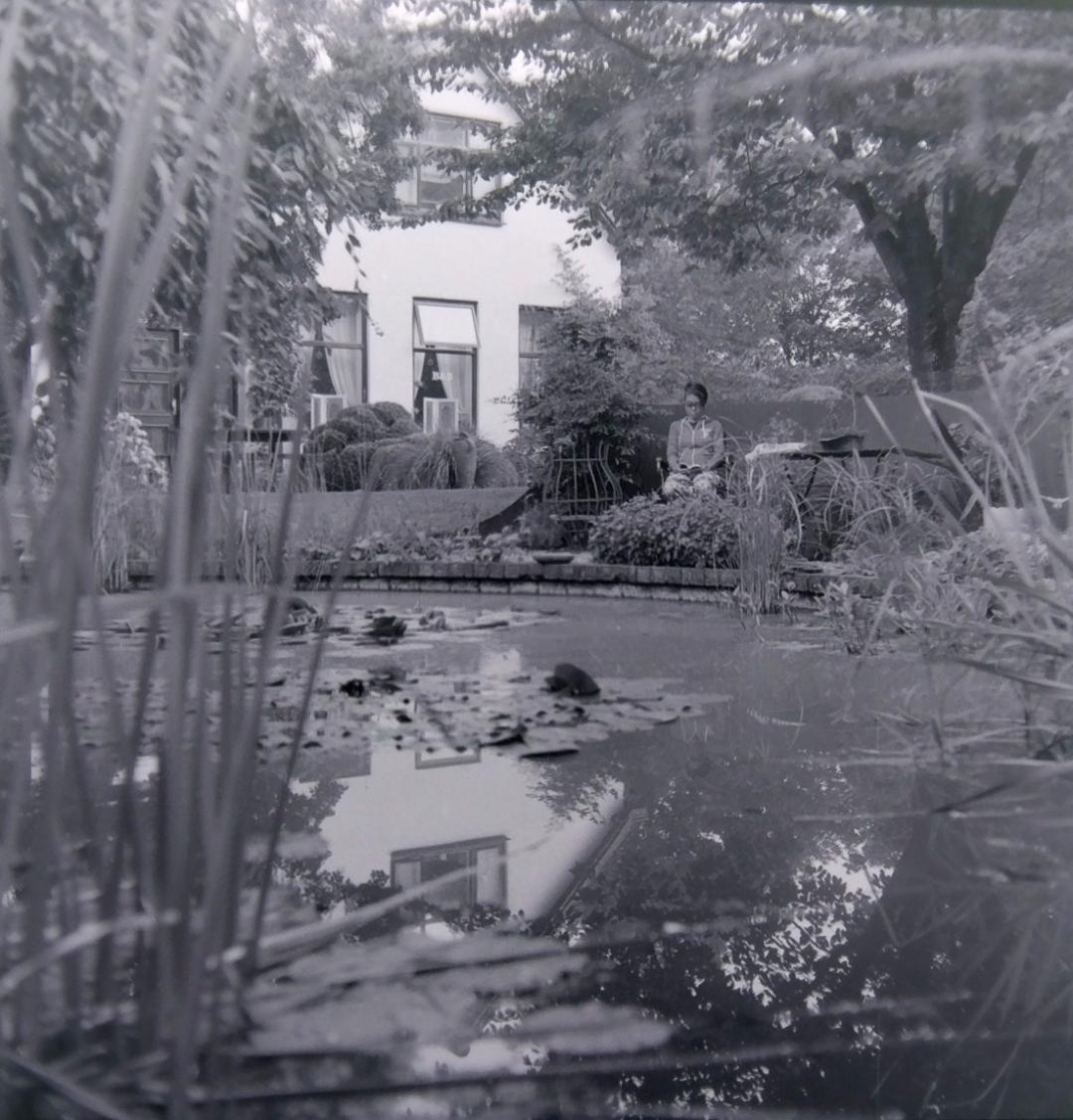
Captured by my husband, Jeroen. De Witte Wolk.

Beloved Friends,

Shalom!

I'm on a Sabbatical leave from work travel and arises lots of interesting process and journey during this period and I've been spending my time in the nature, gardening and art.  


Blessings to you!

Love,
Elizabeth 


7 March 2016

The Power of NonViolence


I advocate and teach nonviolence in parenting.  Sr Rosalia Yeo, FDCC, shared a very powerful true story of Dr Arun Gandhi, grandson of Mahatma Gandhi on the power of nonviolence in parenting in the NVC workshop I attended in 2014.  I encourage you to take some time to read and reflect upon this story between Dr Arun Gandhi and his father. 
 ~  Elizabeth Rutten-Ng,

"Dr Arun Gandhi, grandson of Mahatma Gandhi and founder of the M.K. Gandhi Institute for Nonviolence in his June 9 lecture at the University of Puerto Rico, shared the following story:

I was 16 years old and living with my parents at the institute my grandfather had founded 18 miles outside Durban, South Africa, in the middle of the sugar plantations.  We were deep in the country and had no neighbours, so my two sisters and I would always look forward to going to town to visit friends or go to the movies.

One day, my father asked me to drive him to town for all-day conferences, and I jumped at the chance. Since I was going to town, my mother gave me a list of groceries she needed and, since I had all day in town, my father asked me to take care of several pending chores, such as getting the car serviced. When I dropped my father off that morning, he said, "I will meet you here at 5:00 p.m, and we will go home together."

After hurriedly completing my chores, I went straight to the nearest movie theatre.  I got so engrossed in a John Wayne double-feature that I forgot the time. It was 5:30 before I remembered.  By the time I ran to the garage and got the care and hurried to where my father was waiting for me, it was almost 6:00.

He anxiously asked me, "Why were you late?"

I was so ashamed of telling him I was watching a John Wayne western movie that I said, "The car wasn't ready, so I had to wait," not realising that he has already called the garage.  When he caught me in the lie, he said, "There's something wrong in the way I brought you up that didn't give you the confidence to tell me the truth.  In order to figure out whee I went wrong with you, I'm going to talk home 18 miles and think about it."

So, dressed in his suit and dress shoes, he began to walk home in the dark on mostly unpaved, unlit roads. I couldn't leave him, so for five-and-a half hours I drove behind him watching my father go through this agony of a stupid lie that I uttered.  I decided then and there that I was never going to lie again. I often think about the episode and wonder, if he had punished me the way we punish our children, whether I would have learned a lesson at all.  I don't think so.  I would have suffered the punishment and gone on doing the same thing. But this single nonviolent action was so powerful that it is still as if it happened yesterday. 

That is the power of nonviolence."

15 June 2015

Testimony


If you want an energising, creative and heart-centred learning experience, Elizabeth is the one for you.

Elizabeth's work is her calling and it shows. She comes from a space of Love and that is the message of her work too. 

Because of Elizabeth's creativity, she can integrate movement work into other kinds of training. For example, I have seen her link movement work with the theme of diversity and inclusion at a University. 

Her work is very experiential and enables people to feel the lessons in their body. Elizabeth especially has the ability to transform workplace learning. How often do we get up and dance in the office?

I also deeply appreciate that Elizabeth is committed to her own growth. Her continual growth enhances her service to others. 

~ Vadivu Govind, Facilitator and Coach, joyworks.sg

19 March 2015

Dance Movement Therapy & Depression


Julius was referred to me for therapy last year. On the last session of therapy, I was amazed by his progress and witnessed he practises his reflection and self-care daily. It is the effort of team work, especially his wife, Nicole, who is very supportive and walks hand in hand with him in this journey. I am very touched and moved by the couple's love for one another. Together with Dr Sebsatian Liew and Julius's spiritual director, and through dance therapy, we worked together towards facilitating the healing . I am happily surprised by the results of his process. In the therapy, I empower my client with the tools and skills they need where they can practise them on a daily basis. I observed that Julius practises his self-care earnestly as he is determined to recover from depression. He makes time for reflection, prayers, Me time and exercises. With the tools of learning how to listen to his body in dance therapy, he is able to witness internally to himself in a compassionate way. I am thankful and grateful that Julius is coping better and better. I am honoured to be able to witness his journey. Thank you Julius for sharing your story. It is a first account story without editing. I believe in the authenticity of sharing from where they are. It is also their wish to encourage others to step out and seek help. As a team, with the other professionals and especially the support of family members, working hand in hand together, we can all help someone to battle depression or any other mental health issues.


First account personal story by Julius


I was first diagnosed with clinical depression when I was 17 at the Institute of Mental Health (IMH) after a suicide attempt. I was admitted a further 2 times when I was 20 and 26. For me, my depressive episodes were marked by prolonged feelings of sadness and anger and despair. This often led me to consider suicide. During my stays at IMH and my subsequent discharges, I was given fluoxetine, an anti-depressant to help me cope with the day-to-day aspects of life.

Taking fluoxetine did help me initially in that it was able to make me feel more upbeat about life and less sad. This was great I thought and continue to take it without thinking of alternative natural remedies or changing my lifestyle. After about a year after my last discharge and continuing to take fluoxetine religiously I noticed that I was getting increasingly violent whenever I was agitated. My moods were a lot more erratic and this cause Nicole my wife, then my girlfriend to be afraid of me whenever I was upset.

Nicole always accompanied me to IMH for my doctor visits to get my month’s supply of fluoxetine. We would often wait for 1 hour and see the doctor for 1 minute as the doctors would merely ask “Are you feeling ok since your last appointment?” after which they would write me my prescription for my fluoxetine. She was disturbed that the visits to the doctors seemed rather unhelpful in my recovery. Thus she was determined to help me safely weaned of the fluoxetine which we both believe was making me feel worse over time.

Nicole started to do a lot of research on depression and natural and safe ways to feel better. It was a period of trial and error for us as I started to take vitamins and supplements such as B complex vitamins, Omega 3 oil capsules and chromium. I quit smoking and drinking. I made it a priority to see where I could reduce stress in my life and to have sufficient sleep each night. I started to exercise regularly and be open to Nicole about how I was feeling especially when another depressive episode seem around the corner. Changing our diets to one that limited simple carbohydrates, salt and sugar and processed food was a very big but impactful step we took. Being open to the divine and growing in faith strengthened my resolve. A big step in my continuous recovery was understanding my childhood and past hurts in my life by people. Knowing these wounds and hurts and being able to love myself despite them brought my healing to another level.

It was Nicole’s love and support and personal involvement that made me realize that to get better, I need to take charge of the decisions pertaining to my health, physical, emotional and psychological. Despite heeding Nicole’s advice and suggestions by following through with all the measures we were taking, I was very passive in my recovery as I relied on Nicole to “ heal” me. I left it to her to do most of the research and after a while I could see how much burden she had to shoulder for my sake. Burden because she felt totally responsible for my well being and if things were not working out, she felt herself to be blamed. Over time, I realized that I needed to take charge of my own recovery while embracing the support from Nicole if I were to be serious about getting and staying better. How I did that was to do my own research on depression and medication, preparing my own questions beforehand whenever I visited any medical personnel or person involved in my recovery. Claiming a personal responsibility of my health was and is such an important aspect of my well being.

For about a year and a half, I continued maintaining the above-mentioned measures I took to stay well and for most part, I believe I coped pretty well. However in May 2014, I hit a severe violent and depressive bout after over working for 5 days in a row, with little sleep, an enormous amount of stress, an unhealthy diet and picking up smoking again. This led us to Dr Sebastian Liew to find out if there was anything more we could do for me to stay well and prevent another such violent and depressive episode.

It was very affirming hearing from a naturopath that most of the steps we are already taking is very beneficial in my recovery. I took a neurotransmitter and amino acid test. The tests results shown I was low in serotonin, a neurotransmitter that helps one feel good and motivated. I was also low in isoleucine, an amino acid that helps me to recover after a strenuous exercise. Thus I take a lot longer to recover from strenuous activity and injuries and a higher tendency to feel fatigue. So high intensity exercise was in a way backfiring on my well being because whenever I was fatigued, I would be more susceptible to low and erratic moods swings.

From Dr Sebastian, we explored taking natural supplements as opposed to synthetic man made ones. For example I used to get my vitamin C from a multi vitamin but have since switched to drinking nettle tea. Dr Sebastian pointed out to me the importance of improving my digestion for the absorption of nutrients and supplements. This is because if my digestion were poor, whatever beneficial properties of the herbs and food I was taking would not be absorbed efficiently by my system.

From Dr Sebastian, I got to know Elizabeth. I was keen to explore different ways to get better as I believe in holistic healing. For me to better live with my depression, I realized I had to learn how to deal with it on a physical, emotional, psychological and spiritual manner. Simply relying on supplements or a good diet would not be sufficient.

Elizabeth made me feel very comfortable from the start as we discuss how we could go about our sessions of dance therapy together. From the initial Skype interview I had with her before the commencement of our sessions, I felt I was able to be open to her in revealing sensitive aspects of my life, which would be important areas we can work on during our sessions. The only question I had about dance therapy was if it involves me dancing, of which I feel very shy about. She took the time to explain how dance therapy works and how it might be able to help me gain a better understanding of myself and thus how to better live with depression.

Over the course of 5 sessions, we talked about various topics such how to be able to release negative energy from the body and the concept of the one’s inner child with the influence of both the nurturing and critical parents. Personally, I have many negative thoughts about myself and expectations that have been imposed on me both consciously and subconsciously. These negative thoughts I discovered have played a very big role in my depressive feelings. With Elizabeth’s guidance, we worked through how I am able to identify the sources of these negative thoughts and this has helped me tremendously in the way I think about myself. To be more gentle and loving to myself reduced the incidences of me being too harsh and hard on myself that have not been helpful in accepting myself.

My expectation of dance therapy was that it would enable me to reconnect with my past to explain current behaviors or feelings. Elizabeth told me that the body remembers these emotions and events although cognitively we might have no memory of it. In one session, I was told to reenact the motion of disciplining my dog whenever she urines on the floor which makes me angry. A chill went down my spine when I realized together with Elizabeth’s observation that how I disciplined my dog was in a similar fashion to my violent father. It was a big moment for me as I realized the manner in which I react and respond these days took such a big influence from my past. Without Elizabeth’s help, I might have missed such behavioral patterns or taken a much longer time to be aware of them. In understanding myself better, I am better able to look at my recovery from depression in a more holistic way knowing that it is not just one factor that causes me to feel depressed but a complex web of circumstances that have formed me into the person I am today.

During my first stay in IMH, a teacher who visited me commented how I was courageous to seek help for my depression when most other people would not wish to talk about it. I didn’t understand what she meant then. But looking back now, I realized that what has helped me tremendously all these years was to be open and brave enough to know that I live with a condition which the more I hide from myself and people, the more I would not be able to be better equipped to live with it. I thank God for all the people he has sent into my life to help me when I couldn’t help myself and among them is truly Elizabeth. Praise God!

24 February 2015

On Movin’ Tales

(One of the Embodied Movement Programmes)

Elizabeth, founder of Embodied Movement, drew this during her Creative Me Time on her programme, Movin' Tales. Copyright of Embodied Movement.


What spurs me to develop my own programmes?

To move,
To be moved,
Being moved to move
By my & your own Tales. 

~ Elizabeth Rutten-Ng

My work, for many years, has always revolved around children. Having gone through my own personal journey and transformation, overcoming many challenges as a little girl till my adulthood, I have reclaimed my inner child and security. I forge to provide programmes which can enable and empower parents, caregivers, educators and professional who care for children be they typical or with special needs. I care to want to make a difference in the world where the future belongs to the next generation who will inherit Mother Earth.

~~~~~~~~~~~~~~~~

The nature of the Movin’ Tales programme is developed over a period of time with themes, focusing on the social-psycho-emotional well-being of each child, learning English at the same time incidentally. An added value and benefit to a creative approach in the Movin’ Tales programme is that “a child’s ability to review and relearn in a playful manner important physical developmental stages that may have been missed or rushed through at an earlier age” (Tortora, 2005, Dancing Dialogue).  It's also to revisit it and support them when there is a need through dance and movement. Dance movement therapy activities are added into the programme to integrate the physiological (physical/development), psychological, cognitive (mental), emotional, social as well as communicate in a holistic approach. It is important that the child is seen, heard, held, hugged (Tortora, Ways of Seeing) and acknowledged for each individual's self (developing self-esteem and confidence).  Winnicott (1971) states, "When I am look, I am seen, so I exist."

The programme is catered to the age appropriateness, bearing in mind that each child's learning style is very different. Research has also shown the importance for children to move in their body and play during the developmental milestone and has a close link to learning. Children learn best and at optimal when they are feeling happy, safe, comfortable and through movements. Baby first language, in fact, is movements not words.   Movin’ Tales is designed whereby the love for learning in this case English, is through creative fun ways and the purpose is to develop the intrinsic motivation in the child to learn.  In the way how a new knowledge is being introduced is crucial.  Children absorb like a sponge and are very sensitive during the growing stages.  During the programme, other qualities are also considered such as building self-regulation and impulse control in various activities.  It is important for children to have the ability and sense of control. Other areas I work on are resilience, autonomy, responsibility, compassion, empathy, boundary setting (a very important tool/skill as a youth and an adult).  I had been a teacher in the mainstream and taught all ages and review often what works and does not work.  Instead of focusing purely on the academic, I believe in the holistic approach in nurturing a child/student.  The programme is crafted in the way of imparting and inculcating my love of language and creative arts into the heart of the young minds.

To see the overall developments, it takes time.  I have my structured curriculum however I combine the freedom of expression in it, tapping on each child's creativity, gift, learning style and potential within them.

I facilitate my session oriented from the child's world and work on what they bring in. My training in movement analysis as a therapist and ways of seeing practitioner, specialised in developmental movements allow me to support the children in the programme other than therapy.  It does take time and it is also a journey for the child as well as the adult to discover themselves and their needs through exploration.  The process of learning about the world of things, including their various properties, is a “time-consuming and intense process that cannot be hurried.” (Elkind, 2001)

A child in Singapore has followed through my programme per semester, from parent-child to children; parents have reported back that they see the growth in the child (neurotypical). (Testimony is in my blog.).  A baby takes 9 months to be ready to meet the world.  My programmes take time to see the end results.

Lots of research are indicating when a child is being hurried, the consequence later in life as a youth and adulthood can be detrimental.   I have worked with children over the 20 years, adults as well, and have been studying and researching in this area.  Personally, I have my great concerns and worries over the children of the future generation at the rate they are going.  That spurs me to create holistic programmes and a platform both in Netherlands and Asia where I can provide education and the support for parents, educators and professionals, and of course, children.

I'm no longer afraid to take the stand and move the mountain step by step to create a change in the world I hope to leave behind.

References:

Elkind, D. (2001). 3rd Edition. The Hurried Child. Cambridge: De Capo Press Book.

Tortora, S. (2005). Dancing Dialogue. Baltimore: Paul H. Brookes Publishing Co.

Tortora, S. Ways of Seeing. http://www.suzitortora.org/waysofseeing.html

Winnicott, D. W. (1971). Playing and Reality. London: Routledge

* Currently, Movin' Tales is being offered in Netherlands.  Drop by for a trial class on 28th February.   Register at Embodied Movement website.

26 January 2015

19 January 2015

A Mother's Wish Holiday Programme

Photos taken by Cheow Ping

A Mother's Wish Holiday Programme started by Choo Kah Ying, a mother whose wish for her son, Sebastien and for parents with children with Autism.  Embodied Movement is honoured to be invited to run the session with them on Dec 9 2014.  Here are some snippets of photos taken by Cheow Ping, a great friend of Kah Ying.

1 January 2015

Blessed New Year!

May the New Year filled your life and loved ones with 
Tree of Life, fruits of peace, love, hope & joy in your heart!

Thank you for supporting Embodied Movement.

Looking forward to be of service to you again in 2015.

20 October 2014

Bonding with your Baby - Netherlands 2014


Little Sammi!


 Thank you Abby for your sharing on our Embodied Movement programme "Bonding with your Baby"
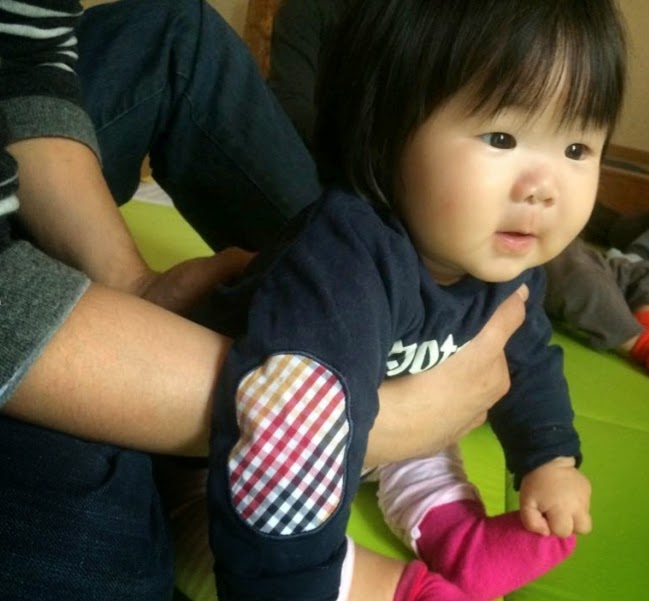
(3 - 10 months old).  Abby attended 2 sessions of our class in October 2014 with her husband and her little girl, Sammi.  I am always moved when I witnessed family bonding together in my programme.  Below is her sharing. 


"My daughter of 7 months old is very different from my first child as she has reflux so badly that she was hospitalized six times in her first six months. Due to the stress we got from it and in particularly the food aversion, we were very glad to have found such baby bonding class. It is not a class that you take and you walk out as a complete different person. It is a class that we as parents learn more on how to decode our baby, going with her flow and giving her what she needs. We have found the massage technique very useful as we really noticed our baby enjoying it and relaxing from it. Also my holding the baby swinging with her while my husband stands behind me swinging along really gives us a good bonding time. We are definitely undo-ing the stressful time and catching up on it. Thanks Elizabeth for the nice class. Really enjoyed it." ~ Abby Lin-Ho

I am holding new classes next year in January 2015.  I am travelling back to Singapore and will only be back in mid-January.  Interested in our programme, email to dancetherapy.kmp@gmail.com to be updated in our mailing list or visit our website Embodied Movement.  New dates and timing will be out soon as I am managing all the work by myself. Thank you for your patience.  

Check our workshops too in Singapore for November & December!

Shalom, Elizabeth <3

16 September 2014

The Art of Play


Having been an educator in the main-stream and as a drama and movement teacher in the early years of my life, I would have said I never understood the idea of play.  Now as a dance therapist and Ways of Seeing Practitioner, I finally understand the meaning of play.  Partly, I discover my own inner child during my therapy in my training ;and partly, I have been processing a lot of my own materials which I have been imparted, inculcated and taught when I was a child. To rediscover play, the essence of play, I first have to learn to play myself. 

Play is such a simple word.

Anyone can play.

Yes, of course anyone can play.

Children are the best models of showing us how to play in fact. However does an adult, a parent, an educator, a facilitator know how to play, interact in play, connect through play, bonding through play with children?


Often, I get parents telling me, "There's no difference in what you do and I do." Or educators saying, "I can do what you do."  I marvel.  They try.  Only when they try to follow exactly what I do, then they shared that it was not so easy after all. 

Seeing is easy, doing is another.

How the child would want to engage us in play or not, withdraw or involve, resist or join in, it is a joint effort of shared play rather than being imposed or expected or directed purely from the adults, telling a child what to do.  Often the child does not have the room and freedom to explore and express in the play, often being directed and led by the adult's expectation.  Free play also consists of a safe environment where there is a freedom of expression yet feeling safe, held and contained at the same time, to explore, create, play and take risks without being judged.


I love playing with children.

They bring lots of creativity, amazement, imagination and wonders.

How do we facilitate, support and encourage play with our children where it is their ownership and creativity? And yet they enjoy the shared space of play together with us?
 

Until I have to spend time explaining what the differences are, what are being entailed, what have happened.... then it rings and makes sense to the parents that there is a difference in the way how they play and relate to and with their child or how I have facilitated play in the program. There are many reflections going through my mind and body  - through observing, questioning, sensing, reading nonverbal cues, listening to myself and to the child, use of tone, words, body language, eye contact, proximity, and much more....... during the interaction of play.  These impact the way we nurture or hinder play with our children.


* Imagine I took years to relearn, rediscover and redevelop the aRt of pLay. Please give time and space for self to play and to relearn the art of play with your children.  It is not an hour's or a day's lesson to learn to do so if we have not tapped on our inner child for a long long time. ;) 

Ready to play? Join me in my workshops!
Take a peep at our website, Embodied Movement programme in Netherlands & Singapore.


28 August 2014

Embodied Parenting


Supported by numerous photos from her work with parents and infants all over the world, Dr. Tortora explains the concept of "embodied parenting." Drawing from interpersonal neurobiology and dance/movement therapy, she shares why attuned nonverbal communication between parent and child is crucial to infant mental health and how dancing is needed in this world now more than ever.  ~ ADTA

17 August 2014

Nonviolent Communication


The Language of 9 needs based on Manfred Max-Neef's research :
(shared by Marshall Rosenberg on Honesty.) Marshall has rephrased them very nicely and explained them in his video on Honesty, posted in my pin interest.

1. Subsistence : food, air, water, shelter
2. Safety/Protection
3. Love
4. Empathy
5. Rest/Recreation/Play
6. A Warm Community
7. Creativity
8. Autonomy
9. A need for meaning/purpose; to contribute to life to make people's life richer
Related Posts Plugin for WordPress, Blogger...

Popular Posts